
Posted on Leave a comment

Cryptocurrency as The Future for Society

Wasie[1], Adha[2] & Fazrihan[3]

Introduction

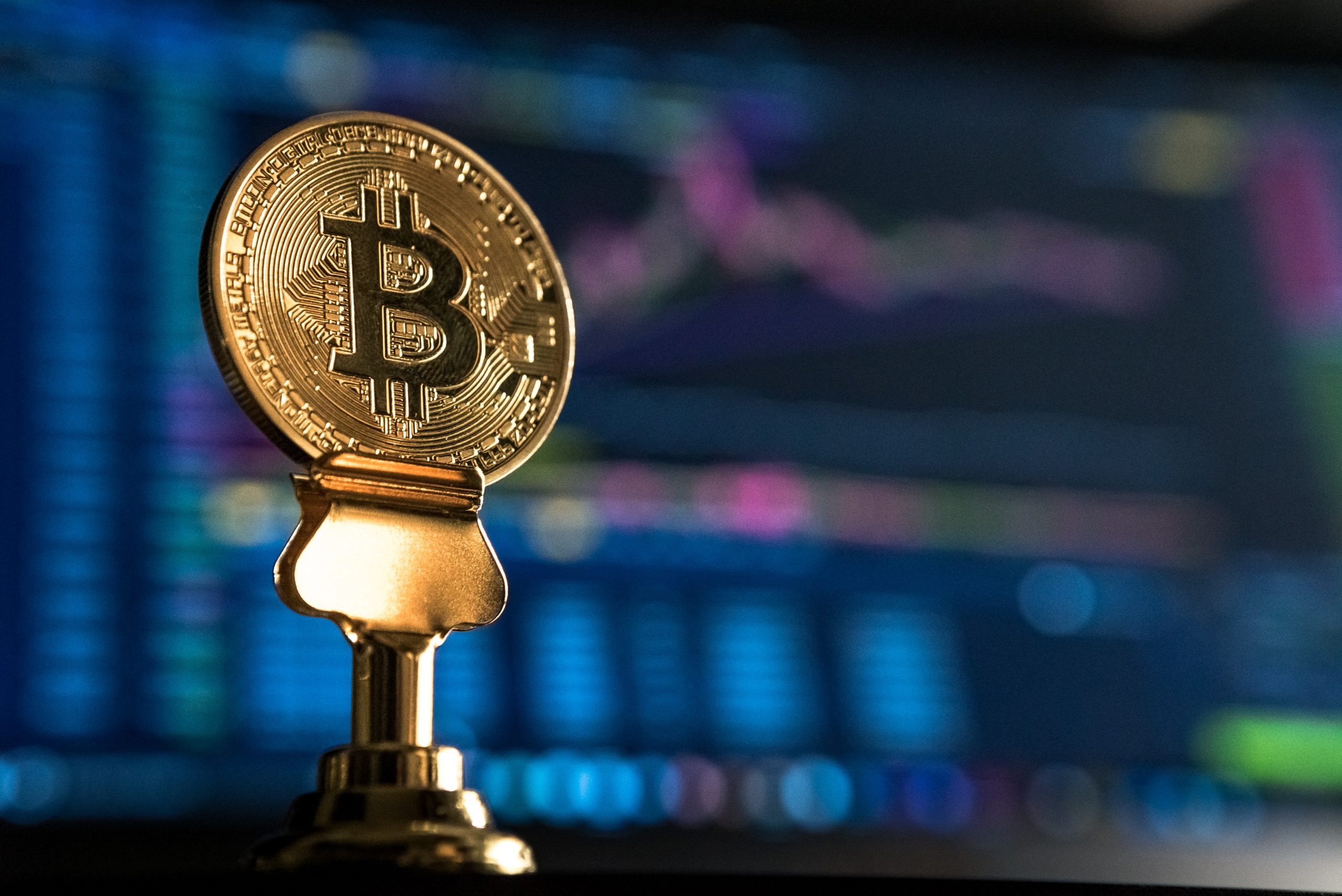
Cryptocurrency is a fast-growing medium of exchange in today’s financial technology (i.e. Fintech). This digital currency has features such as secure online payments, transparency in transactions, making it hard to be printed by the central bank. Decentralised by millions of computers around the world, cryptocurrencies render features that are theoretically immune to manipulation and interference. This digital asset vibrates in the current Islamic economy, as the demands for Bitcoins, Ethereum surged, provoking debates among scholars on its permissibility for the future of the Islamic economy. Furthermore, the interest for this innovation extends into the Gulf and Southeast Asia countries, and at the time of writing this paper, regulators, Shariah scholars, practitioners and academics have begun to see its significance in the financial services industry; some tested the technology. But do we know its advantages, and do we sit well with Shariah to benefit the international community?

Disruptive Digital Currency

Fiat money is a legal tender made by the government and it is backed by an index of goods and services. On the other hand, cryptocurrency is a digital asset that combines the science of cryptography[4] with blockchain technology to enable financial transactions. Its value depends on supply and demand, making it susceptible to volatility in the market. This question focuses on the role of technology in society and its benefits to the financial world.

One of the many advantages in digital currency platforms is that the transaction between two people goes through without intermediaries. It exists in the cyberspace under individuals’ ownership, which is a computerised database in order to secure transactions. In today’s businesses ecosystem, digital transaction is the new normal in the times of booming e-commerce and in the times when Bitcoin becomes convenient in its transaction. Thus, this existing infrastructure in their businesses will only invite others to use cryptocurrency. Even though it is not yet a globally recognised currency, it is hard to argue that ceding control of money supply to central banks curtail the freedom of the people. Another associated advantage with cryptocurrency is to cut down the expensive cost and time related to the transaction. It is often the case when there is a third party involved in the exchange process.

The New Outlook in Finance

To date, we are aware that there are few countries have adopted national cryptocurrencies.[5] So, this digital currency has the potential to replace fiat currency in the future. But does it serve the best interest of society? For the sake of exploring possibilities in digital currency, we contend that this platform could catalyse infinite supplies of digital currency. If crypto replaces fiat money one day, and it becomes well known for its decentralised features, that means no one has the authority to control the supply. One key element in crypto is that it facilitates cross-border payments without the need for banks to act as intermediaries. However, the concern here is that we do not know the person behind the computer. Could this anonymity lead to an unpredictable value of cryptocurrency? If it does, is this instability a bad thing[6] for society?

In case people are wondering what our governments are thinking, below are some pointers:

  • In Malaysia, the regulators of crypto assets are the Securities Commission Malaysia and Bank Negara Malaysia. Cryptocurrencies are not recognised as a means of payment and are not classified as legal tender by Malaysian regulators.
  • In Singapore, cryptocurrencies are not regulated by the Monetary Authority of Singapore (“MAS”). They are not legal tender or securities. However, anyone who buys or sells cryptocurrencies, or facilitates the exchange of cryptocurrencies may be regulated under the Payment Services Act 2019 for money-laundering and terrorism financing risk only. MAS believes that crypto and its were not suitable for retail investors because they did not have intrinsic value and subject to volatile pricing due to speculation. MAS regulates crypto derivative products that were listed and traded only on approved exchanges.
  • In Pakistan, the State Bank of Pakistan banned the use of cryptocurrency as people in the country may not be aware that such digital currency can be used to scam them. However, the regulator may launch its own digital currency by 2025.


Crypto Effects on Society

Cryptocurrency, like fiat money, might have specific negative externalities to society. Especially true if there are concerted efforts to decentralise the digital currency, rendering to the manipulation of price measurement, by the wealthy and big conglomerates. Because of such manipulation, people’s wealth can lose value. As we have mentioned at the outset of this paper, there is an infinite supply of cryptocurrency on digital platforms. That means no one can be certain on who controls it. The fact that ‘we do not know who controls it’ implies that there is centralised control and that there are people who are controlling it. Unfortunately, we just do not know them. When Bitcoin was invented in 2008, an unknown person created it, and some people have speculated that there is a group of people who invented it. Therefore, when these unknown groups of individuals first introduced the currency in 2009, the value did not exceed USD1. However, since it has gained worldwide popularity, the value has continued to rise. The price started at USD 966.00 in 2017, and rose sharply to USD19, 850 in mid-December, followed by a sharp decline of USD12, 000 in the next few days. This instability remains a concern to the public interest, and if it continues unabated, this Bitcoin phenomenon could end up heading to a bubble burst, and it fails to work to the advantages of the people.

The Voice of Shariah On Crypto

The main objectives of the Shari‘ah (or maqasid al-Shari‘ah) are to ensure the well-being and welfare of humanity both in this temporal world and the hereafter. Maqasid is the key to understand the Shari‘ah in its right perspective better. Imam al-Ghazali (d. 505 AH/1111 AC) defined maqasid by stating the following: “The main objective of the Shari‘ah is to promote the public interest and the well-being of the people, which lies in the preservation of their religion (din), their life (nafs), their intellect (‘aql), their progeny (nasb) and their wealth (mal). Whatever ensures and covers the safeguarding of these five origins, and it is a public interest, and whatever leaves these five, it is harmful and against the public interest”. Maqasid Shariah creates a balance in the use of information technology so that the application takes into account goodness (maslahah) and avoid of any harm (mafsadah) either to individuals or communities (Saad, 2019)[7]

Some researchers argue that preservation of property or also known as an objective of Shariah in the property (al-mal) can be divided into three aspects which is the circulation of wealth, fair and transparency, and justice. For example, hoarding wealth is not allowed in Islam as it will stop or at least slow down the circulation of wealth in society. (Noh, 2020)[8]

From Shariah perspective on leveraging new technologies for the economy and society should be in a legitimate manner under the vision of Islamic law principles; emphasise its benefits in actual economic activity, in particular, the avoidance of all harmful activities, including interest, ambiguity (gharar), speculation (maysir) in transactions and contracts. A closer examination of Islamic induced cryptocurrency, for instance, could provide an appropriate framework to regulate it in future. In this regard, the speculation of whether it is permissible or otherwise can be minimised, if it supports the real economic activities with fewer barriers and conflicts. This is the soundest form of an economic system that focuses on the benefits of people. That means any capital and digital resources are used to bring in productive labours and businesses for people in society. The pioneers of the cryptocurrencies in the Muslim world have to spur innovation, creativity, entrepreneurship and to lead a less polarised world by narrowing the equality gap. These businesses that have more exceptional ability to invest in projects that accords with the public interest surely are worthy of consideration. In other words, cryptocurrencies must meet standards, as well as the evolving changes in regulations. Furthermore, using digital currencies to drive the economy of the people should proceed with the following four parameters:

  1. Circulation (rawaj). The currency must always circulate to the widest possible place and society. From an Islamic perspective, money is exclusively used for an exchange, not for speculation or trading to gain profit purposely. Taking financial benefit from money trading can be categorised as usury (riba). This case occurred in 1250 AD. The circulation of the dinar decreased. This is because people minted dinar and hoarded it. When one medium of exchange is not used for a transaction, it can increase the price because of the low supply. Therefore, demand would increase in this case. In the case of Bitcoin, in the last year, the total transaction per day was only 150.000–000 while the total Bitcoin increased until almost 17.600.000 units. This means that only 2% of the units were used for transactions. This would hamper the situation as the total number of transactions was decreasing compared to the entire Bitcoin.[9]
  2. Clarity (wuduh). The currency must be able to preserve and store the value and not subjected to manipulation.
  3. Stability (thubat). The currency gives price measurement and is not manipulated by the rich and big conglomerates banks or governments. According to Meera (2018), the stability of value function is crucial because if money fails to preserve its value reasonably well in the long run, then that would jeopardise the maqasid al-shariah, particularly the protection of wealth (hafiz al-mal) function. If people save money for the future, but the value of money keeps depreciating over time, then people would lose that money wealth in time. This contradicts maqasid al-shariah. Hence it is of paramount importance that money plays the ‘store of value’ function well. The store of value function is indeed a litmus test as to the validity of a medium of exchange in Islamic economics and finance. The price of bitcoin has been soaring Just in 2017, its price has increased by more than 1,900%, from a USD1000 per bitcoin to USD20,000 by mid-December[10]
  4. Justice (‘adl). Generally we understand the idea of justice as closing the disparity between the rich and the poor. Money without intrinsic value has an element of injustice embedded in them and that they promote fasad on earth. In contrast, money with intrinsic value is compatible with the maqasid al-shari’ah and promote socio-economic justice (‘adl). [11] Human history has shown us that the means of a transaction has evolved into many forms. From the barter system, and to the period where the world has experienced an unprecedented accumulation of gold and silver (i.e. dinar and dirham), to the era of fiat (i.e. paper money) and credit cards (i.e. plastic money), to the most present form of digital money. In our opinion, based on our findings in Islamic eschatology, this will likely to be the trend moving forward for the next 3 to 5 years. UAE is a good example when they came up with their national cryptocurrency, referring Maliki fiqh where paper money has previously been a matter of practical consensus in Islam. Cryptocurrency has its fair share of advantages and disadvantages. While the majority of scholars have either declared its impermissibility or expressed uneasiness on this matter[12], some scholars allow it while the rest decided to adopt the conservative approach of tawaqquf (i.e. admission to having insufficient reason to justify an opinion on this matter).

Marjan (2017) found that bitcoin is 

  • Not a commodity because it lacks the characteristics of shariah-compliant commodity as a commodity must have an intrinsic value that can be benefitted from;
  • Not a currency in the light of Shariah as it is a legal tender in many countries where the government does not confer it[13]. The objective of imposing this condition is to regulate the inflation and deflation risk that may harm the value of the currency and the underlying purchasing power it holds. this condition is in line with Ibn Qayyim’s statement which says “

وَالثَّمَنُ هُوَ الْمِعْيَارُ الَّذِي بِهِ يُعْرَفُ تَقْوِيمُ الْأَمْوَالِ، فَيَجِبُ أَنْ يَكُونَ مَحْدُودًا مَضْبُوطًا لَا يَرْتَفِعُ وَلَا يَنْخَفِضُ؛ إذْ لَوْ كَانَ الثَّمَنُ يَرْتَفِعُ وَيَنْخَفِضُ كَالسِّلَعِ لَمْ يَكُنْ لَنَا ثَمَنٌ نَعْتَبِرُ بِهِ الْمَبِيعَاتِ، بَلْ الْجَمِيعُ سِلَعٌ، وَحَاجَةُ النَّاسِ إلَى ثَمَنٍ يَعْتَبِرُونَ بِهِ الْمَبِيعَاتِ حَاجَةٌ ضَرُورِيَّةٌ عَامَّةٌ، وَذَلِكَ لَا يُمْكِنُ إلَّا بِسِعْرٍ تُعْرَفُ بِهِ الْقِيمَةُ، وَذَلِكَ لَا يَكُونُ إلَّا بِثَمَنٍ تُقَوَّمُ بِهِ الْأَشْيَاءُ، وَيَسْتَمِرُّ عَلَى حَالَةٍ وَاحِدَةٍ، وَلَا يَقُومُ هُوَ بِغَيْرِهِ؛) إعلام الموقعين عن رب العالمين(

The thaman (price) is the standard by which the value of [all other forms of] wealth is known. It is obligatory that it be precisely defined and regulated so that it does not rise and fall. That is because if what serves as the price were to rise and fall as commodities do we would not have a price [standard] by which to appraise what is being sold. Instead, everything becomes a commodity. People’s need for a quotation by which all items of sale are appraised is essential and universal. That is not possible except by a price (siʿr) by which value can be known. and that is not possible except by a medium of exchange (thaman) by which things can be evaluated, and it must remain in one state and not be measured in terms of something else.”

  • Nor a financial asset because Islamic law emphasis that a financial asset must be backed by underlying assets/shariah-compliant investment activities and this feature is missing a bitcoin [14]

Meera (2018) examines the implication of bitcoin on Islamic finance and questions its acceptance as a medium of exchange (money) based on its compliance with Shariah. By analysing its nature and characteristics, his paper concludes that cryptocurrencies that are not backed with real assets are not Shariah-compliant. However, shariah scholars are scrutinising how bitcoin can be permissible based on maslahah. Bitcoin is neither fiat money nor real money. The absence of intrinsic value with lack or zero supervision by the central bank may result in exploitation.

Furthermore, we contend that it has elements of maysir and gharar. These can contribute towards socio-economic injustice, thereby jeopardising the Maqasid Al Shariah. Hence based on thorough analysis, he concludes that the fiat cryptocurrencies are not Shariah-compliant. However, gold-backed cryptocurrencies are argued to be desirable and consistent with the Maqasid Al Shariah[15]

Faraz (2018) finds that there are different types of cryptocurrency coins and tokens. Currency coins such as Bitcoin, Litecoin and Ripple are of two types: (1) Coins which are accepted by merchants and (2) those coins which are not accepted by high street merchants and companies beyond the network. From a Shariah perspective, since both types are to serve as a peer-to-peer payment system, they will be deemed as currencies. The ta’amul (common usage) and istilah (social concurrence) among users of these coins are that of currency and medium of exchange. The issued tokens can vary widely depending on their design and functions. Some of the common types of tokens include work tokens, utility tokens, asset-backed tokens, revenue tokens, equity tokens, buy-back tokens. Work tokens give owner permission to contribute, govern, and “do work” on a blockchain and are like licenses. Thus, they are within the ambit of al-huquq al-‘urfiyyah and are similar to the right of passage (haqq al-murür) which can also be sold on a secondary market according to the majority of scholars. Same is the case of the utility tokens which are rights to services or units of services that can be purchased. The asset-backed token is similar to Sukuk al-Ijarah and Sukuk al-Murabahah in the sense that the tokens represent beneficial ownership and interest in the underlying asset. Revenue tokens are issued under the promise of participation in future revenues and can be made Shariah-compliant by giving investors equity and risk-sharing opportunity. Equity tokens represent equity in the issuing company; therefore, Shariah screening of the core business activity and their financial statements must be carried out like the screening methodology of shares. The buy-back tokens can be Shariah-compliant depending on the structure and agreement of such tokens. However, if the subsequent sale is contingent on the initial sales contract and is agreed upon in the first contract, then there could be an element of combination of contracts which potentially could risk non-shariah compliance. Faraz concluded that it would be inaccurate to give one ruling for all cryptocurrencies when tokens sales and projects on blockchains can be structured in various ways.[16]


The Islamic Religious Council of Singapore, MUIS, has not provided a written statement to-date, but the majority of Muslim scholars in Pakistan, Bangladesh and Sri Lanka are not inclined to cryptocurrency. Similar religious opinions have been issued by institutions e.g. Al-Azhar University (Egypt), Dar al Mustafa (Yemen), Darul Uloom Deoband (India), Wifaqul Ulama (UK), Islamic Economic Forum, etc.

The Mufti of the Federal Territory of Malaysia has provided an explanation on 15 Nov 2018 that Bitcoin does not fulfill the criteria as money and it can potentially endanger the well-being of the community and financial system of a country. However, such religious opinion may change, especially if the future generations of cryptocurrencies have safeguards in place in mining and to counter against price fluctuations and money laundering.

Meanwhile, in July 2020, the Shariah Advisory Council of Securities Commission Malaysia has resolved that it is permissible to invest and trade in digital currencies and tokens on registered digital asset exchanges[17]. Here, digital currency is generally recognised as mal from Shariah perspective.


Nevertheless, despite the various views of scholars, we are aware that in today ecosystem, computer science has become the tip of innovation, and many young tech Muslim entrepreneurs are discovering fintech solutions (e;g Islamic crowdfunding). Cryptocurrency is part of that alternative, and it is generally accepted by the international community, for its purest form of decentralisation. However, this is still debatable among majority scholars, an in-depth examination before a ruling becomes definitive (qat’i) among religious authorities around the world; thus, expedite implementation to the end-users. The issue of religious permissibility form a capstone on top of this issue related to digital currencies, and progress in this issue is critical to the Muslim communities, as we now have the opportunity to initiate new economic model for them. It could dictate development in Islamic funds, financial institutions, humanitarian organisations, their directions, of whom the principles of Islamic law are heavily influenced. A quick resolution thus makes the noble mind to flourish in the current economic landscape.

Finally, there is also need to design out models that are not devoid of the Maqasid al-Shari’ah, Sharia-compliant regulatory, Sharia guidelines and policies, and a contemporary Sharia supervisory body to oversee discoveries related to fintech problems and solutions. This is to avoid any element of gharar in the establishment of the receiver and perhaps, the beneficiaries.


Conclusion

We cannot stop cryptocurrency from becoming the mainstream currency one day as we see emergence of more cryptocurrency exchanges and regulators extending its oversight, globally. Just like paper money, cryptocurrency can also evolve to have derivatives such as futures contracts and options. We hope that the market forces enable a broad circulation so people can easily access the digital currency to continue fulfilling their basic necessities. The negative externalities of virtual currencies, and due to the presence uncertainties smouldering the Islamic economy, have made us to purport Sadd al-dharā’i’, in which we warn the community from diving instantly into cryptocurrencies. Until the economic system effectively replaces the current widely circulated means of exchanges (i.e. the new cashless global monetary system), this digital currency becomes the subject to be scrutinised and conferred by authorities[18].

More case studies evidence needed to advance an economic system that benefits all, and this requires a consensus at higher bodies such as the Islamic Fiqh Academy. So far we have presented opinions from a plethora of reviewed literature. We are adamant with its potentials in future. At the same time such financial system also comes with challenges, especially from the Shariah perspectives.

The world continues to witness major disruptive events now, and in the next few years to come, the trend of digital technology will get better. In Islam,  the most important thing is to remain receptive to the evolution of society, to protect generations from the negative externalities, and imbue good values in society. Adding to it is to safeguard the daily fard prayers and earning income only through halal means as part of one’s obligations to hold on to the deen to adapt in society with much disruptive financial technologies.

[1] Mufti Dr Muhammad Wasie Fasih is the director of Alhamd Shariah Advisory services PVT LTD. He can be contacted at wasiefasih@hotmail.com

[2] Dr Adha Shaleh is a freelance researcher and a columnist. He was a researcher with IAIS Malaysia (2016-2019). He can be contacted at anthroad@gmail.com

[3] Ust Fazrihan Duriat is a Shariah consultant in PERGAS Investment and an advisor to Islamic Business & Finance Society of Singapore Management University. He can be contacted at fazrihan@gmail.com.

[4] There are various consensus protocols which are used in cryptocurrency, They ensure the network operates smoothly as every user will have a common version of the blockchain which avoids conflicts and confusion when interacting with other users. For example, there are Proof of Work in which each digital coin is generated by solving challenging cryptographic puzzles through using computational power and electricity. Another include Proof of Stake which investors can earn interest which is based on the amount they have earlier put, for the purpose of validation in the network. This could be deemed as haram. Other protocols include Proof of Funds, Proof of Activity and Proof of Capacity which will not be discussed in this paper.

[5] The countries include China (Digital Yuan), Venezuela (Petromoneda), Dubai (emCash), Senegal (eCFA) and Marshall Islands (SOV). Even J.P. Morgan became the first U.S. bank to launch JPM Coin to enable the instantaneous transfer of payments between institutional clients.

[6] Bitcoin has been the de facto currency of ransomware. It is easily purchased via an exchange, using either a credit card, debit card or bank transfer. Besides, its accessibility and ease of use make it more likely for victims to pay the ransom. In addition, people can buy anything they wish to with Bitcoin, from drugs to other banned items, even from the ‘Dark Web’.

[7] Saad and Fisol (2019), Financial Technology (FinTech) Services:  Analysis from The Perspective of Maqasid Al-Shariah, Journal of Social Science and Humanities, 2 (6): 6-11, 2019

[8] Noh and Abu Bakr(2020) Cryptocurrency as A Main Currency: A Maqasidic Approach, Al-Uqud: Journal of Islamic Economics, Volume 4 Issue 1, January 2020

[9]  Siswantoro and others (2020), The Requirements of  cryptocurrency for money, an Islamic view,  heliyon 6 ( 2020)  e03235

[10] Meera (2018) Cryptocurrencies from Islamic perspective: the case of Bitcoin, bulletin of monetary economics and banking, volume 20, number 4, April 2018:475-492

[11] Meera (2018) Cryptocurrencies from Islamic perspective: the case of Bitcoin, bulletin of monetary economics and banking, volume 20, number 4, April 2018:475-492

[12] Some of the potential non-Shariah compliant elements of a cryptocurrency identified by scholars of muamalat (Islamic law of commercial transactions) include the lack of consensus by public or recognition by the government (i.e. ameer), its huge volatility, Shariah issues in proof of work or proof of stake and gharar (uncertainty) due to anonymity of the parties in effecting an aqad (transaction), resulting in an invalid contract i.e. bay majhul (i.e. contract with uncertainty as to the price, object of sale, or settlement date).

[13] The conferment of legal tender to any cryptocurrency by the government is also a condition imposed by two other prominent scholars ie Mufti Sheikh Taqi Usmani and Prof Monzer Kahf.

[14]Marjan (2017), Shariah Analysis of Cryptocurrency: Bitcoin, a presentation made at Shariah fintech forum, 8 November 2017, Hilton Hotel, Petaling Jaya.

[15] Meera (2018) Cryptocurrencies from Islamic perspective: the case of Bitcoin, bulletin of monetary economics and banking, volume 20, number 4, April 2018:475-492

[16] Faraz (2018), The Shariah Factor In Cryptocurrencies And Tokens, Shariyah Review Bureau, April 2018

[17] The 233rd and 234th Shariah Advisory Council Of The Securities Commission Malaysia Meetings (29 June 2020 and 20 July 2020), https://www.sc.com.my/development/islamic-capital-market/resolutions-of-the-sc-shariah-advisory-council, accessed 1 August 2020.

[18] For example, it is possible for the creation of a unified cryptocurrency for Muslim countries in OIC as one way to confront the dominance of the US as long as there is ability to support the real underlying economic activities of the Islamic global ecosystem and avoid outright monetary speculation.

Other Articles

Posted on Leave a comment

Emphasizing Shariah’s Prohibition on Riba: A Commentary on the Article ‘Are Interest or Coupons in Singapore Government Savings Bond Considered Riba’

SYNOPSIS

This commentary on Ustaz Kamal Mokhtar’s article[1] on the ruling of Singapore Government Savings Bonds (“SSB”) serves to raise awareness amongst Singaporean asatizah[2] and the general public on the topic of Fiqh Muamalat as well as providing them with the essential understanding of Shariah rulings on interest earnings pertaining to SSB and any conventional government securities. The commentary will outline Ustaz Kamal’s arguments and critically analyse them in the light of Shariah principles and the soundness of its analogy.

Prelude

The introduction of Shariah law and principles in the modern financial and economic world is relatively new in certain societies (whilst more established in others) of a very diverse community of Muslims globally. Historically, there have been active discussions amongst Shariah scholars, academics, economists, policymakers and practitioners on various topics and challenges to the upholding of Shariah principles in the modern financial and economic world. All these synergies of discussions led to the establishment of internationally recognised Shariah standards which offer necessary guidance on Islamic economics and finance, namely, the International Islamic Fiqh Academy[3] guidelines, the Accounting & Auditing Organization for Islamic Financial Institutions (“AAOIFI”)[4] Standards, and the Islamic Financial Services Board (“IFSB”)[5] Standards. These institutions play a significant role in ensuring Shariah authenticity and providing Shariah parameters, governance and oversight for Islamic finance to operate in the modern economic and financial world.

Hence, in any assessment of financial products with respect to Shariah compliance, it would be intuitive to refer to their existing standards. Likewise, in any practice of ijtihad (legal reasoning), all existing international standards, fatawa (expert legal opinions), deliberations should be examined thoroughly and considered before giving one’s own opinion publicly. This has been effective in preventing the spread of misinformation and misinterpretation of relevant sources from the Qur’an and Sunnah[6]. Practically, this will also, in the long-run, actuate Shariah harmonisation, while maintaining local autonomy (based on the concept of urf).

AAOIFI standards No. (21), titled ‘Financial Paper (Shares and Bonds)’ provides detailed accounts on Shariah requirements on financial papers. In relation to government bonds, it states under Item 4: Rules for Issuance of Bonds:[7]

“The issuance of all kinds of bonds is prohibited when these bonds include stipulations for the return of the amount of loan and excess in any form, whether such excess is paid at the time of the satisfaction of the principal amount of loan, is paid in monthly or yearly instalments or in another manner and whether this excess represents a percentage of the value of the bond, as is the case with most types of bonds, or a part of it, as is the case with zero-coupon bonds. Likewise, prize bonds are also prohibited. This applies irrespective of the bonds being private, public or governmental”.

Under Item 6: Shariah Substitute for Bonds, a Shariah-compliant version is mentioned:

“The Shariah substitute for bonds are investment Sukuk[8]”.

Similarly, International Islamic Fiqh Academy resolution No. 60 (6/11)[1] reiterates the prohibition of riba in bonds due to its interest payments, regardless if they are government-issued or otherwise: [9]

“Any bond that represents an obligation to pay a principal amount along with an interest payment or stipulated beneficial conditions is prohibited from being issued, purchased, or traded in Shariah, this is because it is an interest-based loan whether the issuer is private, publicly-linked or the state”.[10]

In today’s modern world, bonds can be called anything, but this does not change its nature. International Islamic Fiqh Academy further states in the same resolution that “It (i.e. bonds) does not have the effect of calling them ‘certificates’ or ‘investment’ or ‘savings instruments’ or naming ‘interest’ that is committed to ‘profit’ or ‘rent’ or ‘commission or ‘return’”.[11]

Such established aforementioned opinion is held by a vast majority of Shariah scholars, such as Sheikh Mustafa al-Zarqa[12], Dr. Yusuf al-Qardawi[13], Dr. Abdul Aziz Izzat al-Khayyat[14], Dr. Ali Ahmed al-Salous[15], Sheikh Muhammad Uthman Shubair [16], Dr. Wahbah al-Zuhayli[17], Dr. Ali al-Quradaghi[18], Dr. Salleh bin Zabin al-Marzuki[19], Sheikh Abd al-Majid Salim (previous Sheikh of Azhar)[20], Dr. Nazih Hammad[21], Dr. Mubarak Sulaiman Al Sulaiman[22], Dr. Ahmad bin Muhammad al-Khalil[23], Dr. Sami Hasan Homoud.[24]

Moreover, Shariah scholars consensually agreed (ijma’) that riba which originated from debt-based transaction is prohibited.[25] Nonetheless, riba is a broad concept in Islamic economics and finance that requires adequate guidance, and in this paper, we shall provide the essential Shariah rulings pertaining to riba that originated from debt-based transactions.[26]

EMPHASIZING SHARIAH PROHIBITION ON RIBA

Islam and other monotheistic religions (viz Judaism and Christianity) alike censure and prohibit usury (riba).[27] In Islam, the prohibition of riba is based on the Quran, the Sunnah[28], and ijma’ [29] (scholarly consensus). The Quran states:

الَّذِينَ يَأْكُلُونَ الرِّبَا لَا يَقُومُونَ إِلَّا كَمَا يَقُومُ الَّذِي يَتَخَبَّطُهُ الشَّيْطَانُ مِنَ الْمَسِّ ۚ ذَٰلِكَ بِأَنَّهُمْ قَالُوا إِنَّمَا الْبَيْعُ مِثْلُ الرِّبَا ۗ وَأَحَلَّ اللَّهُ الْبَيْعَ وَحَرَّمَ الرِّبَا ۚ فَمَن جَاءَهُ مَوْعِظَةٌ مِّن رَّبِّهِ فَانتَهَىٰ فَلَهُ مَا سَلَفَ وَأَمْرُهُ إِلَى اللَّهِ ۖ وَمَنْ عَادَ فَأُولَٰئِكَ أَصْحَابُ النَّارِ ۖ هُمْ فِيهَا خَالِدُونَ

“Those who take riba (usury or interest) will not stand but as stands the one whom the demon has driven crazy by his touch. That is because they have said: “Sale is but like riba”, while Allah has permitted sale, and prohibited riba. So, whoever receives an advice from his Lord and desists (from indulging in riba), then what has passed is allowed for him, and his matter is up to Allah. As for the ones who revert back, those are the people of Fire. There, they will remain forever”. (2:275)

يَا أَيُّهَا الَّذِينَ آمَنُوا اتَّقُوا اللَّهَ وَذَرُوا مَا بَقِيَ مِنَ الرِّبَا إِن كُنتُم مُّؤْمِنِينَ * فَإِن لَّمْ تَفْعَلُوا فَأْذَنُوا بِحَرْبٍ مِّنَ اللَّهِ وَرَسُولِهِ ۖ وَإِن تُبْتُمْ فَلَكُمْ رُءُوسُ أَمْوَالِكُمْ لَا تَظْلِمُونَ وَلَا تُظْلَمُونَ

O you who believe, fear Allah and give up what still remains of riba, if you are believers (2:278) But if you do not (give it up), then listen to the declaration of war from Allah and His Messenger. However, If you repent, yours is your principal. Neither wrong, nor be wronged” (2:279)

Are Riba and Interest Similar? (Definition of Riba and Interest)

Riba is an Arabic word which means “increase” or “increment”.[30] From the aforementioned Quranic verses, we observe that riba signifies an increment in a specific transaction which was common and known among Arabs and other nations at the time of revelation. This common transaction, according to Imam Tabari, was either a deferment of an existing due debt to a new maturity with an increase in the repayment amount or giving a loan that is due with an increment after a given period.[31] Verse 279 of Surah Baqarah implies that (i) riba is defined as any kind of increment above the principal of a debt or a loan; and (ii) it labels such increment as unjust. In addition, verse 275 of Surah Baqarah clarifies that profit, despite being an excess arising from a sale, is not riba.

In this instance, we define riba (interest), in regards to financial transactions[32], “as any contractual increment in a loan or debt due to the time element”.[33] Similarly, this is how in essence interest is defined both legally and financially, and thus any increment above the principal of the debt is interest, and that is the “riba” that is prohibited according to the terminology of the Quran.

This riba which is originated from debt-based transaction can also be found in Singapore Savings Bonds (“SSB”)[34]. This is because, in essence, they are bonds or debt securities backed by the government. The contractual agreement between subscribers and the issuer mirrors the agreement between debtor and creditor.[35] Subscribers to SSB receive interest payments at regular intervals, in addition to the return on the principal amount upon maturity or upon redemption. The stipulated interest payments are fixed and this constitutes an increment over and above the principal amount. This contractual interest payment agreement constitutes the “riba” according to Quranic terminology as discussed above.[36]

Relooking at Riba (Interest) Prohibition

Knowledge[37] of the methodology and rules of interpretation is essential to derive a proper understanding of the primary sources of Islam (ie. Quran and the Sunnah). Therefore, the methodology and rules which one uses to distinguish texts as speculative (zhonni) or definitive (qat’i), general (‘aam) or specific (khaas), literal (haqiqi) or metaphorical (majazi), how to comprehend the implications (dalalat) of a legal text etc. are among the matters which warrant our attention while relooking at riba. This is because an adequate grasp of the methodology of interpretation and its rulings will ensure the proper use of human reasoning and analogy (qiyas) in a legal system which originates from divine revelation, such as, how analogy should be constructed, what are its limits, and what authority would it command in conjunction, or in conflict, with other recognized legal evidence.

A careful study of riba verses in the Quran shows us that these verses are definitive (qat’ii) in their evidence of transmission (thubut) as well as in their meaning (dilalah)[38] without specifying injunction to any effective cause/reason (‘illah) for the prohibition. Moreover, the Quranic word of ‘riba’ is absolute (mutlaq) that denotes a prohibition which neither qualified nor limited in its application.[39] Thus, the absolute nature of the prohibition of ‘riba’ implies that ‘any’ increment to a loan, whether the loan is from relatives or strangers, for the rich or the poor, or with  (or without) mutual agreement etc., is constituted as “riba”. In addition, principles of jurisprudence (usul fiqh) dictate that any exceptions to the original ruling should be based upon definitive and sound evidence.[40] For example, the prohibition to consume carrion, blood, pork, and that upon which a name has been invoked other than Allah in verse 173 of Surah al-Baqarah is a definitive verse, however, exception is given for people who are in dire necessity, as the exemption is based on the same definitive degree as the original ruling.

For riba, there are no exceptions. In fact, the prohibition of riba is emphasised (in bold):

فَإِن لَّمْ تَفْعَلُوا فَأْذَنُوا بِحَرْبٍ مِّنَ اللَّهِ وَرَسُولِهِ ۖ وَإِن تُبْتُمْ فَلَكُمْ رُءُوسُ أَمْوَالِكُمْ لَا تَظْلِمُونَ وَلَا تُظْلَمُونَ

“But if you do not (give it up), then listen to the declaration of war from Allah and His Messenger. However, if you repent, yours is your principal. Neither wrong, nor be wronged.” (2:279)

While FSAC[41] advocates fiqh dynamism so that religious scholars (asatizah) can re-evaluate and improve the learning of fiqh among Muslims in a holistic manner across all levels of society, one needs to understand which rulings based on al-mutaghayyirat (rulings that may adapt to change) that can be adapted to suit local context and which rulings based on tsawabit (fundamentals principles that are fixed) that must always be maintained and adhered to (ta’abbud). For example, the mandating of prayers and fasting, and the prohibition of riba, adultery, homosexuality and the consumption of alcohol, are fundamental principles which will not change according to the changes in time and/or place.

Not All Interest is Riba?

Ustaz Kamal’s article, suggests that an increment in loans between lenders and the government (through the central bank or statutory bodies) is deemed permissible as the relationship between Central banks and SSB holders are unique when compared to the relationship between common debtors and creditors. Ustaz Kamal further argues that the unique relationship between a government and its people makes the hand that gives the loan, pays the interest amount, and receives the guaranteed principal with increment amounts to be of the same hand; hence it is permissible as long as there are no elements of fraud, injustice, or/and exploitation.

Furthermore, it is viewed that such interest is claimed to be permissible because the public and citizens are the ones who gave the loans to the government, hence when the government distributes interest on the loans received, they are in essence giving themselves the interest payments that come from one source of funds. Since the giving hand and the receiving hand are the same, these interest should be deemed permissible per his analysis.

Like the aforementioned opinion, there are may be other asatizah who do not see interest (or coupons) in SSB Products as riba. However, FSAC would like to state that such an opinion is shaaz (aberrant) and groundless and is not accepted by the vast majority of Islamic finance scholars and practitioners in Singapore and around the globe. The original ruling of an absolute text (prohibition of riba) shall remain unless those securities can be restructured in line with muamalat ruling (i.e. profit-loss-sharing arrangement[42]).

FSAC is aware of the article’s quoted opinions of Shaykh Tantawi[43] and Sheikh Ali Jumu`ah, former Grand Mufti of Egypt, who respectively state that the monies placed in banks are not loans and that bank interests are not riba. However, such opinions are shaaz (aberrant) and holds no bearing in Shariah. Contemporary media has been a platform for scanty religious rulings to surface, among them include permitting interests as a necessity[44] that allows the governments or financial intermediaries to mobilise savings for economic growth, such as building of infrastructure, agricultural and industrial activities.[45]

In this instance, FSAC, in consultation with scholars, academicians and Islamic finance practitioners, has a differing opinion to Ustaz Kamal’s article on the following basis:

Firstthe reasoning in Ustaz Kamal’s article is logically fallacious. That article insisted that the permissibility of riba is true because of statements made by scholars from Al-Azhar.[46] The analogy used in the article is unsound, hence categorised in usul fiqh as qiyas ma’al faariq (analogy with discrepancy)[47] which is considered bathil (invalid).This is because the relationship between a governmentand a citizen bears weak resemblance to the relationship between a master and a slave. A master, in Islam, has the full ownership over the slave and his/her property, hence, there is no literal “riba” as the owner is one ― who is the master. However, the government neither owns the citizens nor their property, and the property of the government and citizen is independent of one another. Moreover, the concept and reality of “ownership” of a master, a slave, government and citizens, in essence, differ from one another. Therefore, it is prohibited in Shariah for either the government or the citizen to transgress on the other party’s property. In other words, both the citizens (as debtor) and the government (as creditor) has the legal right (both in Shariah and conventional law) to seek justice from the judicial system for any breach in the contract agreement – hence how can the debtor (interest payer) and the creditor (interest receiver) be considered the same in the eyes of Shariah. Conversely, to view that the citizen owns the government and its property seems to have inclination towards Marxist theory which suppresses individuals’ rights, and this is against Shariah principles.[48]

Second, vast traditional scholars abhor riba even between a father and his children.[49] This is because children have complete rights on their property and are free to manage their property as they please – unlike a slave with a master. Additionally, in the hadith narrated by Jabir bin Abdullah (may Allah be pleased with him), the Prophet ﷴ (ﷺ) said that “you and your property are for your father”[50] is interpreted as “for your father to utilize his children’s money where necessary” and it is expounded by the vast majority of scholars that children should be dutiful to their parents financially on top of caring, loving, and respecting them. Furthermore, the hadith needs to be understood in context. Imam Al-Shafi’i said “…Allah has ruled the inheritance of a father from a son, He has made him (the father) like other beneficiaries of inheritance (in terms of ownership over the son’s property), and his (the father) inheritance share may be lesser than the many of the beneficiaries of inheritance; this shows that the son has complete right over his own property”.[51]

Third, absence of cheating, fraud, riba, injustice and exploitation, does not, in any circumstance, make riba permissible to be consumed, as all of these elements are merely general wisdom of the prohibition of riba according to Quranic terminology. According to the majority of scholars, Shariah rulings should be established upon effective causes/reasons (‘illah) and not built on general wisdom (hikmah).[52] From this, it would follow that a hukm shar’i  (Shariah ruling) is present whenever its ‘illah is present even if its hikmah is not, and a hukm shar`i is absent in the absence of its ‘illah even if its hikmah is present. Although SGS products are generally safe, stable and offer attractive returns, the returns is stipulated in the contract and guaranteed, hence making them not aligned to Shariah ruling on debt-based contract.

Fourth, the prohibition of riba is based on evidence that is definitive (qat’i) in meaning (absolute denotation) and transmission.[53] Therefore, based on the principles of jurisprudence (usul fiqh), the contestable opinion is built upon unsound analogy and evidently groundless and hold no bearing in Shariah so as to permit an exception to the Qur’anic ruling on riba. The rule of thumb is that qiyas cannot be applied to change the original ruling of a hukm.[54]

Fifth, the article makes reference about status of interest between a subsidiary to its parent company. FSAC would need to clarify that the treatment of father-son, master-slave and company-subsidiary are not the same. The first two groups concerns natural persons (shakhsiyyah ‘adiyah) while the third group relates to juristic persons / natural entities (shakhsiyyah i’tibariyyah).[55] Even the rights and duties of father-son and master-slave are different. Hence, the correlation and analogy used to infer legality and permissibility of interest is incorrect and aberrant.

Lastly, FSAC acknowledges the legal maxim which states that a ruling or a religious opinion can only be made after a full and accurate understanding of the subject matter. After a thorough analysis, FSAC views the form and substance of SSB contracts as written in the Government Securities Act [56], issued by Singapore Government, as definitively similar to the form and substance of prohibited contractual increments (riba) in loans or debts according to Quranic terminology. Hence, the return on investment is not aligned to Shariah (i.e. since the Shariah prohibits guaranteed principals and fixed profits in investments). [57] Table 1 below shows the difference between investment and bond contracts, and the similarity between bond and loan contracts in contemporary practices.

Table 1:

Basic for Comparison of Financial ProductsInvestment (Stocks)Conventional BondDebt (Loan)
MeaningFinancial instrument that provides composite ownership of a public limited company in exchange for monetary valueFinancial instrument which acts as borrowed capital for the institution issuing themLoan taken out by consumers or firms
Issued byCompaniesGovernment institutions, companies and financial institutionsMost loans are given by banks
What is it?Equity InstrumentDebt InstrumentDebt Instrument
Term for return earnedDividendInterestInterest
Return earned on principal amountNot fixedFixedFixed
Is the return guaranteed?NoYesYes
Status of HoldersStockholders are owners of the company in a composite formBondholders are lenders to the companyDebtholders are lenders to consumers or firms

Source: Author’s own description.

USE OF FUNDS

FSAC is aware that all borrowing proceeds from the issuance of SGS Products are invested by the Singapore Government. Despite good governance and proper budgeting, the Singapore Government may need to meet some budget deficit by issuing SGS Products. It is common for governments to issue bonds to finance national obligations. 

Pursuant to the Government Securities Act, the monies placed in SGS Products are paid into a Government Securities Fund, and outward payments from this fund are generally limited to the paying of interest and repayment of principal associated with securities issuances. The proceeds paid into the Government Securities Fund are instead utilised for the following purposes:

  • Purchase of trustee stocks or any of any other stocks, funds, securities or investments, as mentioned in the Financial Procedure Act.

Surpluses from the Government Securities Fund may be transferred to the Consolidated Fund, which may in turn be utilised for the following purposes:

  • Invested on deposit in any bank, in gold or other bullion, in securities of, or guaranteed by, any government or international financial institutions, in any stocks, funds, securities or investments;
  • Repayment of principal sums or interest payable on any government securities, where the monies in the Government Securities Fund are insufficient; and
  • Otherwise authorised by law[58]

After a comprehensive review, FSAC collectively noted that khultah may have taken place (i.e. such proceeds of funds are likely to have intermingled with Shariah non-compliant business/financial activities) and are not typically where the funds would typically be used for national development and/or infrastructural building for the benefit of the general public. 

CONCLUSION AND RECOMMENDATIONS

Singapore, being a politically stable and economically healthy country, presents an attractive investment avenue for both local and international investors. With the spirit of a prudent and responsible governance, Singapore adopts the jurisprudence of fiqh aqalliyyat (Shariah rulings for minorities) in a secular country which protects its citizens regardless of race and religion. The Muslim community is rather special, being the only community in Singapore whose affairs are regulated through the Singapore Constitution. Hence, religious scholars mostly apply taysir al-fiqh (simplification in Shariah rulings) to facilitate the lives of the local Muslim community.

FSAC takes into consideration rukhsah (concession) and fiqh al-waqi’ (rulings based on contemporary challenges) to enable financial inclusion for the Muslim minority in Singapore. However, after a thorough review of SSB Products, FSAC views that the SSB Products are not suitable for Muslims as they do not fulfil Shariah parameters of fiqh muamalat (jurisprudence on commercial transactions) and usul fiqh (principles of jurisprudence). Since SSB has similar structures as the other conventional government securities (including the T-Bills), the same legal opinion for SGS Products will also apply (see Annex 1).

In line with the legal maxim “what is prohibited (under Shariah) to take is also prohibited (under Shariah) to give[59], SSB products are not Shariah-compliant for the Muslim community.[60] Hence, they should find alternative solutions where the structures have been formally endorsed by an independent Shariah supervisory board with the relevant expertise or are closer to the spirit of their religious teachings or objectives of the Shariah (maqasid al-Shariah). FSAC is of the opinion that there is riba considering that there is a guaranteed increment of the principal amount, which contravenes the Shariah, whether the activity is lending or investment.

FSAC makes the following recommendations:

  • FSAC encourages all Muslims to save and invest prudently for their future. The Muslim community should explore Shariah-compliant savings accounts, as well as other platforms which offer qualified Shariah investment products like ETFs, unit trusts and different types of sukuk.
  • Any Shariah alternatives that are commercial viable should be endorsed by qualified Shariah supervisory boards. The monies placed under the Shariah alternatives should also be subject to regulatory oversight by issuing-country’s central banks and monetary authorities and under strict Shariah guidelines such as independent Shariah audits and Shariah-compliance monitoring.
  • To tap into the investment monies of Muslims, FSAC recommends that, like how MAS Sukuk is a Shariah-compliant version of the T-Bills, the SGS Products should be structured to have Shariah-compliant alternatives in future to include all Singaporean consumers. Shariah-compliance requirements can align fund investments towards socially-responsible and more sustainable (similar to UN SDGs) avenues that are fair to issuers and investors through risk-sharing, and avoids the financially repressive nature of interest and its compounded payments.

General Guidelines for the Muslim Community in Singapore

In cases where some Muslims have already invested in SSB Products, FSAC recommends the immediate redemption of products before the bonds’ maturity to get back the principal amount, especially if there is no penalty for early investment exits. Any returns earned previously should be channelled to charity.

وَإِن تُبْتُمْ فَلَكُمْ رُءُوسُ أَمْوَالِكُمْ لَا تَظْلِمُونَ وَلَا تُظْلَمُونَ  

“However, if you repent, you may have your principal. Neither wrong, nor be wronged.” (2:279)

In the absence of an official fatwa from MUIS, FSAC recommends that the Singapore Muslim community to practice ihtiyat (precaution) towards shaaz (aberrant) religious opinions and hold on to classical rulings held by the vast majority of scholars. TheSingapore Muslim community must use this guidance to avoid SGS Products, and also refer to more learned religious teachers for a second opinion.

Our Prophet ﷺ once said that “a time will come when one will not care how one gains one’s money, legally or illegally” (Sahih Bukhari, 275).

In facing this issue, FSAC would also like to call upon the Singapore Muslim community to deepen and strengthen various sciences of knowledge (including religious knowledge[61]) as part of societal expectations and religious obligations as Singapore citizens. Should there be confusion regarding any financial issues, the community should seek clarification from our pool of the ARS-accredited asatizah fraternity with an in-depth knowledge in fiqh muamalat or usul fiqh.

Wa Allahu A’lam

(Only Allah Knows Best)

FINANCIAL SHARIAH ADVISORY & CONSULTANCY (FSAC)

Annex 1 – Detailed Comparison of SGS Products

Singapore Government Securities bonds (“SGS”)T-billsSavings Bonds (“SSB”)
Available tenor2, 5, 10, 15, 20 or 30 years6 months or 1 yearUp to 10 years
Method of saleUniform price auction – competitive or non-competitive bidsUniform price auction – competitive or non-competitive bidsQuantity ceiling format
Frequency of issuanceMonthly, according to the issuance calendarFortnightly or quarterly, according to the issuance calendarMonthly, for at least 5 years
Minimum investment amountS$1,000, and in multiples of S$1,000S$1,000, and in multiples of S$1,000S$500, and in multiples of S$500
Maximum investment amountNone; up to allotment limit for auctionsNone; up to the allotment limit for auctionsS$200,000 overall
Buy using SRS and CPF funds?YesYesSRS: Yes; CPF: No
Type of interest rate paymentType of interest rate paymentNo coupon; issued and traded at a discount to the face (par) valueFixed coupon, steps up each year
How often interest is paidEvery 6 months, starting from the month of issueAt maturityEvery 6 months, starting from the month of issue
Secondary market tradingAt DBS, OCBC or UOB main branches; on SGX through brokersAt DBS, OCBC or UOB main branchesNo
TransferableYesYesNo
Maturity and redemptionNo early redemption. Investors receive the face (par) value at maturity (i.e. price of S$100).No early redemption. Investors receive the face (par) value at maturity (i.e. price of S$100).Can be redeemed in any month, with no penalty. Investors receive the face (par) value plus accrued interest upon redemption.

(Source: Monetary Authority of Singapore, 2019, https://www.mas.gov.sg/bonds-and-bills/products-for-individuals. Accessed 12 August 2019)


[1] Kamal Mokhtar. Are Interest or Coupons in Singapore Government Savings Bond (SGSS) Considered Riba?https://blog.pergas.org.sg/wasat/are-interest-or-coupons-in-singapore-government-savings-bond-sgss-considered-riba/, 31 July 2019. Accessed 01 August 2019.

[2] Islamic religious teachers

[3] The Council of the International Islamic Fiqh Academy of the Organisation of Islamic Cooperation is an international organization that brings together Shariah scholars and thinkers in various fields of knowledge (i.e. jurisprudence, civilization, science, economics) from all over the Islamic world to study contemporary problems and provide effective solutions from the Islamic tradition and principles. See http://www.iifa-aifi.org/

[4] AAOIFI is an Islamic international autonomous non-profit corporate body that prepares accounting, auditing, governance, ethics and Shariah standards for Islamic financial institutions, participants and the overall industry. See http://aaoifi.com/

[5] IFSB is an international standard-setting organisation that promotes and enhances the soundness and stability of the Islamic financial services industry by issuing global prudential standards and guiding principles for the industry, broadly defined to include banking, capital markets and insurance sectors. The IFSB also conducts research and coordinates initiatives on industry-related issues, and organises roundtables, seminars and conferences for regulators and industry stakeholders. See http://www.ifsb.org

[6] To make a distinction here: Sunnah refers to both the practice and sayings of the Prophet ﷺ while Hadith only refers to the Messenger’s sayings recorded verbatim.

[7] AAOIFI standards No. (21), titled ‘Financial Paper (Shares and Bond)’. Retrieved 4 August 2019, from http://aaoifi.com/shariaa-standards/?lang=en 

[8] Investment Sukuk are certificates of equal value representing undivided shares in ownership of tangible assets, usufruct an services or (in the ownership of) the assets of particular projects or special investment activity. (AAOIFI standard No. 17)

[9] See The Council of the International Islamic Fiqh Academy resolution No. 60 (6/11)[1]. Retrieved 4 August 2019, from http://www.iifa-aifi.org/1813.html

[10] إن السندات التي تمثل التزاماً بدفع مبلغها مع فائدة منسوبة إليه أو نفع مشروط محرمة شرعاً من حيث الإصدار أو الشراء أو التداول، لأنها قروض ربوية سواء أكانت الجهة المصدرة لها خاصة أو عامة ترتبط بالدولة.

[11] ولا أثر لتسميتها شهادات أو صكوكاً استثمارية أو ادخارية أو تسمية الفائدة الربوية الملتزم بها ربحاً أو ريعاً أو عمولة أو عائداً.

[12] Fatawa Mustafa al-Zarqa, Pg. 590

[13] Fiqhul Zakah, Vol.1, Pg. 526

[14] As Syarikat Fi As Shariah al Islamiyyah wal Qanun al Wad’i Vol.2, Pg. 227

[15] Al Iqtisad al Islami wal Qadaya al Fiqhiyyah al Mu’asirah, Vol. 2, Pg. 583

[16] Al Muamalat al Maaliyyah al Mu’aasirah, Pg. 179

[17] Majallah Majma’ al Fiqh al Islami, issue 6, Vol. 2, Pg. 1322

[18] Majallah Majma’ al Fiqh al Islami, issue 7, Vol. 1, Pg. 133

[19] Syarikah al Musahamah fi Nizam al Sa’udi, Pg. 396

[20] Majallah al Azhar, eighth edition (1947)

[21] Qadaya Fiqhiyyah Mu’asirah, Pg. 208

[22] Ahkam al Ta’amul fi Aswaq al Maaliyyah al Mu’asirah, Vol. 1, Pg. 222

[23] Al Ashum wa as Sanadat wa Ahkamuha, Pg. 291

[24] Majallah Majma’ al Fiqh al Islami, issue 7, Vol. 2, Pg. 1394

[25] Jaami’ li ahkam al-Quran li al-Qortubi, Vol.3, Pg. 241.

[26] This paper focuses on Riba al-Qard. Riba al-Buyu’ and its types will be excluded due to its irrelevance to our discussion.

[27] Jaami’ li ahkam al-Quran li al-Qortubi, Vol.3, Pg. 366.

[28] Jabir (May Allah be pleased with him) reported that “Allah’s Messenger (ﷺ) cursed the accepter of interest and its payer, and one who records it, and the two witnesses, and he said: they are all equal” (Sahih Muslim 1958)

[29] Imam an-Nawawi, al-Majmu’, Vol.9, Pg. 387.

[30]Ibn Faaris, Mu’jam maqayis al-lugha. In Lisanul Arab, the root word of riba is “increase” while in the Hans Wehr Dictionary of Modern Written Arabic, riba is translated to mean interest, usury, to grow, to exceed, to raise, to rear, to bring up, to practise usury, etc.

[31] Jami’ al-Bayan ‘an Ayat al-Quran li Imam Tabari (Vol.3, Pg. 101) Ahkam al-Quran li Imam al-Jassas (Vol. 3, Pg. 184).

[32] We exclude from this definition Riba al Buyu’ and its types because of its irrelevance to our discussion.

[33] Kahf, M. (2006, August). Maqasid al Shari’ah in the Prohibition of Riba and their Implications for Modern Islamic Finance. In Presented Paper at IIUM International Conference on Maqasid Al-Shari’ah.

[34] Just like the T-Bills and Singapore SGS (collectively called “SGS Products”), SSB can be regarded as a treasury bond issued by the Singapore Government.

[35] Government Securities Act – Singapore Statutes Online. (2019). Sso.agc.gov.sg. Retrieved 19 August 2019, from https://sso.agc.gov.sg/Act/GSA1992

[36] The only increment over a loan that is allowed and mustahab (recommended) is when the debtor pays back its loan to the creditor with an extra amount (above its principal) that is not stipulated in the initial contract agreement. This is based on the Hadith “The best amongst you is the one who pays the rights of others generously” (Sunan an-Nasa’I, Hadith No. 4693).

[37] This knowledge is known as Usul Fiqh (Principles of Jurisprudence).

[38] Has only one meaning and admits no other interpretation, as previously discussed in the definition of riba in Quranic terminology.

[39] For example, a ‘book’ or a ‘pen’ is a generic noun which applies to any book or pen without any restriction.

[40] Wahbah al-Zuhayli, al-Usul al-Fiqh al Islamiy, Pg. 209 & 254.

[41] FSAC (Financial Shariah Advisory & Consultancy) is an advisory arm of PERGAS Investment Holdings and was established in 2008.

[42] Using concept such as mudharabah or musharakah which justly distributes risk between issuer and bond-holders.

[43] Ustaz Kamal’s view bears resemblance to contents in Shaykh Sayid Tantawi’s book “Bank Operations and their Islamic Legal Status” (Mu`amalat al-Bunuk wa Ahkamuha al-Shar`iyyah), Cairo, Nahdat Misr, 2001 edition. Shaykh Sayid Tantawi quoted Rashid Rida in Al-Manar, p.332, vol.9, 1906 which makes reference to Imam Muhammad `Abduh who said that in general, riba which is not forbidden involves a loan transaction that benefits all parties without any element of harm and greed.

[44] There are scholars who rationalize riba by arguing that interest payments are intended to compensate the lender for the loss of purchasing power of his money due to inflation. This is not acceptable as prohibition on Interest is definitive, whether the interest is a compensation for the loss of its purchasing power or compensation for the time value of the usage of the loan money.

[45] There are scholars who support such view namely, Fahmi Huwaidi (in Al-Arabi, no 341, April 1987) who is a political scholar and Dr Abd al-Munim an-Nimr (in Al-Ahram, June 1, 1989) who is an Islamic thinker and historian. The majority of this view’s supporters are neither Shari’ah nor Usul Fiqh scholars.

[46] This logical fallacy is defined as “appeal to false authority”, which means using an alleged authority as evidence in the argument when the authority is not really an authority on the facts relevant to the argument.

[47] It is when the effective cause of analogy is not applicable to the new case in the same way as to the original case, due to the invalidity of uniformity or substantial equality between them. (i.e the effective cause in the prohibition of wine is intoxication, then a beverage which only causes a lapse of memory would differ with wine in respect of the application of ‘illah, and this would render the analogy invalid)

[48] Imam Al-Shafi’i mentioned that “the status of a leader vis-à-vis citizens is like the status of a guardian vis-à-vis an orphan” (Al-Suyuti, Al-Ashbah wa al-Nazair, Surabaya: Al-Hidayah, Pg.83).

[49] Kashaaf al-Qannaa’ li Imam al-Buhuti, Vol. 3 Pg. 320.  The Ja’fari school of Shi’a, however, view that there is no riba between parents and their children as well as between husband and wife.

[50] Sunan Ibn Majah, Hadith No. 2379.

[51] Imam Al-Shafi’I, Ar-Risaalah, Pg. 168.

[52] Wahbah al-Zuhayli, al-Usul al-Fiqh al Islamiy, Pg. 650.

[53] Surah al-Rum, verse 39, Surah al-Nisa’, verse 161, Surah Al ‘Imran, verses 130-2 and Surah al-Baqarah, verses 275-81

[54] Wahbah al-Zuhayli, al-Usul al-Fiqh al Islamiy, Pg. 642.

[55] Details on this are not within scope of this paper.

[56] “Legislation And Guidelines For SGS”. 2019. MonetaryAuthority of Singapore. Accessed September 6 2019. https://www.mas.gov.sg/bonds-and-bills/investing-in-singapore-government-securities/Legislation-and-Guidelines-for-Singapore-Government-Securities.

[57] Non-stipulated increment, however, is permissible and recommended, based on the Hadith:

  • Jabir b. ‘Abdullah reported: The Prophet of Allah () owed me a debt; and he paid me back and gave me an extra amount (Sahih Muslim, Book 6, Hadith No. 86)
  • “The best amongst you is the one who pays the rights of others generously” (Sunan an-Nasa’i, Hadith no. 4693)

Furthermore:

  • In Clause 20 (Arrangement of hibah with qard contract) of BNM Hibah issued on 3 August 2016 (BNM/RH/PD 028-5), it states that “The borrower under a qard must not grant hibah that is conditional to the qard contract to the lender, in the form of cash, in kind or benefit”. Other provisions mention that the granting of hibah solely based on the borrower’s discretion to the lender is allowed. Hence, the borrower must not even disclose, promote or market the indicative rate or prospect of granting of hibah. The full version can be found here:

 http://www.bnm.gov.my/index.php?ch=57&pg=137&ac=515&bb=file, accessed 12 September 2019.

  • In Clause 14 (Salient features of qard contract) of BNM Qard issued on 26 February 2018 (BNM/RH/PD 028-7), its states that “The qard contract must not contain any contractual benefit to the lender…”. Such benefit which is prohibited includes hibah granted by the borrower to the lender in the form of cash, in kind or benefit that is conditional to the qard contract. However, contractual benefit that is generic in nature, not dependent on the qard contract, and not exclusive to the lender, is allowed. The full version can be found here: http://www.bnm.gov.my/index.php?ch=57&pg=137&ac=517&bb=file, accessed 12 September 2019.

[58] E.g. part of government funds (for repayment of loans) or Contingencies Fund for payment of costs and expenditure.

[59] Ibn Nujaym, al-Ashbah wa al-Nazair, Pg.132; al-Hamawi, Ghamz Uyun al-Basair fi Sharh al-Ashbah Wa al-Nazair, 1:449; Majallat al-Ahkam Al-Adlliyyah, Pg.20, article 34l Muhammad Al-Zuhayli, al-Qawaid al-Fiqhiyyah, 1:39;  Al-Suyuti, al-Ashbah wa al-Nazair, Pg.150.

[60] Refer to another paper published in PERGAS Ar-Risalah Issue 23 [January-April 2017 Edition] (ISSN 2424-8207) and PERGAS Blog. The original title published was “RELIGIOUS GUIDANCE IN THE SUBSCRIPTION OF SINGAPORE SAVINGS BONDS BY MUSLIMS”. The URL is here: https://www.academia.edu/36489499/SHARIAH_REVIEW_OF_SINGAPORE_SAVINGS_BONDS

[61] An example is fiqh muwatonah, where the Muslim community has to practise religion and be exemplary citizens to society.

Other Articles

Posted on Leave a comment

Mengemudi Keluarga Bak Nabi Ibrahim alaihissalam

Menjelang bulan Zulhijjah, kita seringkali diingatkan tentang kisah betapa hebatnya pengorbanan dan tingginya ketaatan Nabi Ibrahim alaihissalam dan keluarga baginda dalam menjunjung perintah Allah Subhanahuwataala.

Begitu juga tentang hikmah-hikmah di sebalik pensyariatan ibadah korban yang dijalankan setiap tahun di seluruh dunia.

Namun, di sebalik kisah ini terdapat pelbagai pengajaran yang dapat kita jadikan sebagai panduan dan teladan terutama sekali bagi pemimpin keluarga dalam mencorak sebuah keluarga yang sakinah, mawaddah dan rahmah.

Mari kita singkapi panduan dan teladan ini melalui firman Allah Subhanahuwataala:

فَلَمَّا بَلَغَ مَعَهُ ٱلسَّعْىَ قَالَ يَــٰـبُنَىَّ إِنِّىۤ أَرَىٰ فِى ٱلْمَنَامِ أَنِّىۤ أَذْبَحُكَ فَٱنظُرْ مَاذَا تَرَىٰ ۚ قَالَ يَــٰۤـأَبَتِ ٱفْعَلْ مَا تُؤمَرُ ۖ سَتَجِدُنِىۤ إِن شَآءَ ٱللَّهُ مِنَ ٱلصَّــٰبِرِينَ

Maksudnya: “Maka ketika anaknya itu sampai (ke peringkat umur yang membolehkan dia) berusaha bersama-sama dengannya, Nabi Ibrahim berkata: ‘Wahai anak kesayanganku! Sesungguhnya aku melihat dalam mimpi bahawa aku akan menyembelihmu; maka fikirkanlah apa pendapatmu?’ Anaknya menjawab: ‘Wahai ayah, jalankanlah apa yang diperintahkan kepadamu; insya-Allah, ayah akan mendapati daku dari orang-orang yang sabar’.” (Surah as-Saffat, 37: 102)

Antara pengajaran yang dapat kita peroleh daripada kisah pengorbanan Nabi Ismail alaihissalam ini adalah:

1. Sikap Dalam Menghadapi Ujian

Setiap hamba yang beriman perlu sentiasa menyedari bahawa mereka tidak terlepas dari ujian dan dugaan Allah Subhanahuwataala yang berupa musibah atau nikmat menurut kadar kemampuan masing-masing.

Allah Subhanahuwataala berfirman:

أَحَسِبَ ٱلنَّاسُ أَن يُتْرَكُوۤاْ أَن يَقُولُوۤاْ ءَامَنَّا وَهُمْ لَا يُفْتَنُونَ

Maksudnya: “Patutkah manusia menyangka bahawa mereka akan dibiarkan dengan hanya berkata: ‘Kami beriman’, sedang mereka tidak diuji (dengan sesuatu cubaan)?” (Surah al-Ankabut, 29: 2)

Seorang bapa yang beriman apabila berhadapan dengan ujian Allah Subhanahuwataala akan menghadapinya dengan penuh ketaatan dan ketenangan sebagaimana yang digambarkan oleh Nabi Ibrahim alahissalam. Sifat ini juga dapat dilihat pada diri anaknya, Nabi Ismail alaihissalam melalui jawapan balasnya.

Ujian yang diberi oleh Allah Subhanahuwataala kepada hamba-hamba-Nya adakali bertujuan untuk memberi kesedaran kepada diri kita atas kelalaian atau kecuaian kita supaya segera kembali bertaubat. Selain itu, ada juga ujian yang bertujuan menggugurkan dosa dan mendekatkan diri kita kepada Allah Subhanahuwataala.

2. Sifat-Sifat Keibubapaan

Sifat-sifat keibubapaan perlu ditonjolkan dalam mendidik dan membesarkan anak-anak terutama sekali sifat penyayang. Seorang bapa dianggap dan dilihat sebagai seorang pelindung di mata keluarga. Dengan menzahirkan sifat penyayang, ia seolah-olah telah memberi suatu jaminan kepada keluarganya bahawa mereka berada di dalam lingkunan dan persekitaran yang selamat.

Ungkapan yang digunakan oleh Nabi Ibrahim alaihissalam ketika memanggil Nabi Ismail alaihissalam, “Wahai anak kesayanganku!”, adalah contoh jelas yang menggambarkan sifat penyayang seorang bapa terhadap anaknya.

عَنْ أَبِي هُرَيْرَة َرَضِيَ ٱللهُ عَنْهُ قَالَ: قَبَّلَ رَسُولُ ٱللهِ ﷺ ٱلْحَسَنَ بْنَ عَلِيٍّ وَعِنْدَهُ ٱلْأَقْرَعُ بْنُ حَابِسٍ ٱلتَّمِيمِيُّ جَالِسًا، فَقَالَ ٱلْأَقْرَعُ: إِنَّ لِي عَشَرَةَ مِنَ ٱلْوَلَدِ مَا قَبَّلْتُ مِنْهُمْ أَحَدًا، فَنَظَرَ إِلَيْهِ رَسُولُ ٱللهِ ﷺ ثُمَّ قَالَ: مَنْ لَا يَرْحَمُ لَا يُرْحَمُ

Maksudnya: Dari Abu Hurairah radiallahuanhu, “Rasulullah Sallallahualaihiwasallam pernah mencium al-Hasan bin Ali dan ketika itu al-Aqro’ bin Habis at-Tamimi sedang duduk bersama baginda. Lalu al-Aqro’ pun berkata, ‘Aku mempunyai sepuluh orang anak namun tidak seorangpun dari mereka pernah kucium.’ Maka Rasulullah Sallallahualaihiwasallam pun memandangnya lalu baginda berkata, ‘Barangsiapa tidak merahmati/menyayangi maka dia tidak akan dirahmati’.” (HR al-Bukhari & Muslim)

3. Kepentingan Berkomunikasi

Demi mencapai komunikasi yang berkesan dan efektif, ibu bapa perlu memastikan jalinan komunikasi antara mereka dengan anak-anak berlaku secara dua hala dan bukan satu hala sahaja. Matlamat ini sukar dicapai dan dilaksanakan sekiranya wujud jurang komunikasi antara ibu bapa dengan anak-anak.

Ruang untuk berbincang dan bertanya atau bertukar pendapat perlu juga dibuka kepada anak-anak terutama sekali dalam perkara besar yang melibatkan diri mereka dan memerlukan keputusan. Seorang bapa tidak perlu berasa janggal, kekok atau ‘segan’ apabila berkomunikasi dengan anak-anak.

Dalam usia semuda 13 tahun, Nabi Ismail alaihissalam telah diberi ruang untuk melontarkan pendapatnya. Jawapan balas Nabi Ismail alaihissalam mencerminkan kematangan pemikirannya melalui pendidikan yang telah beliau terima dari bapanya. 

4. Suburkan Sifat Terpuji

Keimanan kepada Allah Subhanahuwataala yang merupakan tunjang agama perlu disemai pada diri anak-anak semenjak kecil lagi sehingga terbit sifat taat, yakin, sabar dan reda dalam diri mereka terutama sekali apabila diuji oleh Allah Subhanahuwataala.

Ketaatan Nabi Ibrahim dan Nabi Ismail alaihimassalam terhadap Allah Subhanahuwataala mengatasi segalanya sehingga mereka mengutamakan perintah Tuhan lebih dari kecintaan mereka terhadap dunia dan keluarga. Sifat seperti ini perlu ditanam dalam diri anak-anak sehingga timbul kesedaran akan tanggungjawab mereka sebagai hamba Allah Subhanahuwataala.

Begitu juga kewajipan dalam mentaati suruhan ibu bapa perlu ditekankan sekalipun mereka berdua bukan dari kalangan orang yang beriman kepada Allah Subhanahuwataala asal sahaja ia membawa kepada kebaikan tanpa meninggalkan perintah atau melanggar larangan Allah Subhanahuwataala.

Keyakinan Nabi Ibrahim dan Nabi Ismail alaihimassalam terhadap segala ketentuan Allah Subhanahuwataala sangat utuh sehingga mereka berdua tidak sedikit pun berasa sangsi atau ragu-ragu apabila berhadapan dengan suatu ujian. Malah ujian ini dihadapi dengan penuh kesabaran dan keredaan.

Jelas sekali, kisah Nabi Ibrahim alaihissalam dan keluarga baginda merupakan suatu keberhasilan yang telah dicapai oleh seorang bapa dalam proses pentarbiahan anak. Ia menggambarkan betapa besarnya peranan seorang bapa dalam membimbing dan mendidik ahli keluarganya untuk menjadi Muslim yang beriman dan bertakwa. Amanah dan tanggungjawab yang diberi oleh Allah Subhanahuwataala perlulah dipikul dan digalas tanpa mengenal erti jerih perih dan penat lelah.

Marilah kita sama-sama berusaha meningkatkan ketaatan kita terhadap perintah Allah Subhanahuwataala selain mentaati kedua orang tua selagi mana ia tidak bertentangan dengan perintah agama sepertimana yang ditonjolkan oleh Nabi Ibrahim dan Nabi Ismail alaihimassalam melalui keperibadian mereka.

Bersempena dengan Aidiladha yang bakal menjelang, ayuh kita merebut peluang mendekatkan diri kepada Allah Subhanahuwataala serta meraih ganjaran-Nya dengan memartabatkan salah satu syiar Islam iaitu melalui perlaksanaan ibadah korban.

Semoga dengan melakukan ibadah ini ia dapat menebus dosa-dosa kita, memperoleh kedudukan yang mulia sisi Allah Subhanahuwataala serta membentuk keperibadian yang ikhlas, sabar, belas ihsan, semangat bantu membantu dan sentiasa merasa berkecukupan dengan segala yang dimiliki.

Semangat pengorbanan ini juga perlu diperluaskan kepada segala persiapan kita buat ahli keluarga dari segi perancangan kewangan dan sebagainya setelah kita tiada di dunia nanti agar ia menjadi amal jariah dan bekalan buat kita di akhirat kelak.

وصلّى ٱلله على سيّدنا محمّد وعلى آله وصحبه وسلّم 

Other Articles

Posted on Leave a comment

Religious Guidance on Cryptocurrencies & Its Related Activities

Dr. Hazik Mohamed, Fazrihan Duriat[1], Syed Muhammad Alsagoff & Ilham Sanusi

  1. Money comprises of three basic functions: a medium of exchange, a unit of account, and a store of value. In comparison currency is but a circulated medium of exchange (eg: legal tender). Its core function is to serve as a customary accepted form of payment by the people in exchange for goods and services. However, unlike money, it lacks intrinsic value. Currency is instead backed by money which can be done via gold, silver[2], commodities, or the government [3]. In fact, fiat money used in global economic systems today is considered a currency, and this includes the emergent use of plastic and digital currencies.
  1. In order for currency to effectively perform its role as a medium of exchange, it requires relative stability, which can be done via government or sovereign monetary regulation.

يَـٰۤا أَيُّهَا ٱلَّذِينَ ءَامَنُواْ إِنَّ كَثيرًا مِّنَ ٱلْأَحْبَارِ وَٱلرُّهْبَانِ لَيَأْكُلُونَ أَمْوَالَ ٱلنَّاسِ بِٱلْبَـٰطِلِ وَيَصُدُّونَ عَن سَبِيلِ ٱللَّهِ ۗ وَٱلَّذِينَ يَكْنِزُونَ ٱلذَّهَبَ وَٱلْفِضَّةَ وَلَا يُنفِقُونَهَا فِى سَبِيلِ ٱللَّهِ فَبَشِّرْهُم بِعَذَابٍ أَلِيمٍ

“O you who have believed, indeed many of the scholars and the monks devour the wealth of people unjustly and avert [them] from the way of Allah. And those who hoard gold and silver and spend it not in the way of Allah – give them tidings of a painful punishment.”

[Surah Al-Tawbah 9:34]

  1. In Singapore, the sovereign currency, Singapore legal tender, or the Singapore Dollar (SGD), is issued by the Monetary Authority of Singapore (“MAS”), which serves as the nation’s central bank, for use by the public to facilitate daily economic transactions and activities[4].
  1. Cryptocurrencies bear some similarities to regular currencies. Unlike regular currencies, cryptocurrencies are purely digital assets, supported by blockchain enabled encryption techniques, using cryptography to secure transactions, control the creation of additional units and verify the transfer of assets. The critical difference between the two is that cryptocurrency can be created independently of central banks and can be used independently of typical regulated financial intermediaries (such as banks).
  1. In addition, there are significant limitations to the use of cryptocurrency in comparison to regular currency as it has yet to be widely accepted. If someone acquires cryptocurrencies in the form of equity, security or utility tokens, these tokens cannot be traded as a commodity or treated as currency because its purchasing power and right of exchange is limited to the specific asset, product or service for which the token is issued. The token would typically have to be monetized for fiat or regular currency in order for broader access to other assets, goods and services.
  1. In its current state, cryptocurrencies are mostly used as a medium of exchange (utility tokens) in lieu of regular currency, to make payments for certain assets, goods and services where the seller or service provider expressly accepts the cryptocurrency as payment. Further, cryptocurrencies are then floated in crypto-exchanges (public exchanges for cryptocurrencies) and are often acquired as an asset for speculative purposes as the value of cryptocurrencies can rise to earn the holder profits.
  1. A number of countries have banned the use or holding of cryptocurrencies for various reasons including the protection of investors (given the volatility of prices) and lack of regulation (resulting in cryptocurrencies being the choice for online illicit activities mode of payment). It is important to note that most of these fiqh rulings are on the basis on protecting the ummah, and not on the legitimacy of the cryptocurrency itself.
  1. In general, currencies or wealth (mal) should benefit human beings without harming the integrated global economic and financial systems. This is the essence of the Islamic moral economy. There should be an element of profit and loss sharing in Islamic transactions (mu’amalat).[5] Speculative behaviours have an element of gambling (i.e. maysir) in them where the gain is not what you have earned through effort, and the profit/loss based on mere chance, or the Greater Fools Theory[6]. Widespread speculative behaviours have been blamed for the global financial crises of 2008 and in most previous financial crises. Hence, Muslims are advised to stay away from speculative practices because, although it may bring quick profits initially, the gain is not sustainable and will eventually crash and bring harm to the speculator and possibly affect a wider participating community.
  1. Where cryptocurrencies have either been pegged or backed by gold in order to fulfill the condition of mal (wealth or property), it is advisable to understand how the assets are being used as reserves to back up the cryptocurrency. For example, gold reserves being locked in a vault to back gold-backed cryptocurrencies can potentially violate the Shari’ah ruling on hoarding.
  1. In view of the fiqh understanding of the Shari’ah, it is mandatory that such issuances of digital currencies be clear in its use case and purpose of issuance in order to remove uncertainty (gharar).

The use of the token has to be specified clearly — currently, tokens usage have been as an Equity Token, Security Token and a Utility Token. Each token is treated differently according to the Shari’ah as well as the regulatory authorities because of its nature and usage. Due to this, its treatment by the regulators as well as the Shari’ah will be in accordance to its nature and usage.

  1. As such, based on our analysis:
  2. Utility tokens are used as a means of exchange and hence it will be categorized as a currency. Shari’ah rules on currency will be applied to utility tokens.
  3. Equity and security tokens should be categorized as mal (wealth) as they have a store of value, just like other forms of equities (shares, stocks, etc.) and other forms of securities. Shari’ah rules on equity and securities will be applied to them.


RELIGIOUS GUIDANCE ON ICOs

  1. An Initial Coin Offering (ICO) entails the creation and issuance of a new digital coin or token by a company looking to raise capital for their venture. In general, the company announces a specified amount of funds that it wants to raise, and the fundraising continues until that amount is reached. ICOs are conducted online, and purchasers use fiat currency, or other cryptocurrencies, like Bitcoin and EtherCoins, to pay for the new tokens.
  1. Companies using ICOs as a capital-raising method have generally been companies that use blockchain technology as part of their business model to provide a particular service or product. These companies disseminate the new ICO tokens to buyers via blockchain. Potential purchasers in an ICO do not receive a prospectus; instead, issuers often publish a white paper[7] describing the ICO.
  1. The initial idea was to give greater financial access — blockchain technology could be used to issue new cryptographically secure “tokens” or “coins” that are easy to transmit peer-to-peer — without a central authority. The coins could be sold to fund open-source software projects and other services that people find useful but are hard to finance with traditional structures. They could even function as shares and thus allow companies to finance themselves far more efficiently, from a broader range of people, and without the intermediaries that take fees and require a drawn-out process. Or the “coins” could represent some unit of utility, such as a means of exchange within the issuing entity, gigabyte of storage or access to a network.
  1. However, some ICO issuers might lead buyers to believe that they can expect a return on their investment or otherwise be able to participate in a share of the returns provided by the project. Buyers also might be told that there will be an opportunity to sell the tokens on a secondary market or an online virtual currency exchange, although such secondary market liquidation venues are not guaranteed.
  1. Initial Coin Offerings (or ICOs) have become a popular way of raising capital for businesses, particularly start-ups, with the ability to raise large amounts of capital in a very short period of time.
  1. The public is often subjected to opportunists who may use religion or (unrecognized, faulty, flawed) faith-based arguments to legitimise their profit-driven intentions. Possibly, the opportunists may not even know that they may be violating permissibility rules of the Shari’ah, based on fiqh This religious guidance is issued to safeguard the unknowing or uninformed public, and not to be presumptuous of the intentions of the ICO issuers.
  1. The public is thus advised to check the professional background of the individuals involved in the offering using Monetary Authority of Singapore (MAS) directories and verified lists of issuers, wherever possible. They should also check the validity and credibility of the Shari’ah Advisors[8] behind the ICO issuance.

يَـٰۤا أَيُّهَا ٱلَّذِينَ ءَامَنُواْ إِن جَاۤءَكُمْ فَاسِقُۢ بِنَبَإٍ فَتَبَيَّنُوۤاْ أَن تُصِيبُواْ قَومَۢا بِجَهَـٰـلَةٍ فَتُصْبِحُواْ عَلَىٰ مَا فَعَلْتُمْ نَــٰدِمِينَ

“O you who have believed, if there comes to you a (disobedient/wicked/undetermined) person with information, investigate, lest you harm a people out of ignorance and become regretful over what you have done.”

[Surah Al-Hujurat 49:6]

  1. Tokens offered as securities, require investment professionals to be licensed and registered under MAS securities regulations.
  1. Tokens offered as a utility need to have clear rights and benefits to be used for either goods or services that the company provides.
  1. The rights and benefits of ICO tokens will vary depending on the offering. Tokens in an ICO might not represent an ownership stake in a company, i.e. they are utility tokens and not equity tokens.
  1. It is important to know what you are receiving in exchange for your investment, including liquidity issues as it is possible there will not be a market to sell or exchange your ICO tokens.
  1. It is also important to note that new regulations may be imposed on cryptocurrencies since the regulatory environment is quite dynamic.

In conclusion, we would like to advise all Muslims be thoroughly informed before they enter into any investment offer/program, especially when the offer is too good to refuse. It is better to remain safe and miss out on a seemingly good investment opportunity, than to lose halal and hard-earned income and savings.

In view of this, we urge the Muslim to observe the Shari’ah principle of sadd al dharai (blocking the means that can lead to evil), so that a Muslim’s mal may remain protected from injustice and free of unlawful income.

Despite this document being explicit, those who are still unclear on the religious position of these issues, please refer to qualified religious authority with relevant economic, financial and technical capability at Financial Shariah Advisory & Consultancy (FSAC) of PERGAS Investment Holdings (PIH).

[1] Fazrihan Duriat is a Shariah consultant in PERGAS Investment and an advisor to Islamic Business & Finance Society of Singapore Management University. He can be contacted at fazrihan@gmail.com.

[2] Known as Al-Thaman al-Khilqī. In the kitab Ihya Ulumiddin, Imam Ghazali (r.h.) refers to gold and silver, both of which have all the qualities of money as mentioned in the primary sources of religion i.e. Koran and Sunnah.

[3] Known as Al-Thaman al-‘urfī. Based on majority of scholars, value of such monies is extrinsic as they are issued under authoritative decree of a country (i.e. made legal tender) and the value is based on supply and demand and affected by monetary/fiscal national policies.

[4] أُولِي الْأَمْرِ مِنكُمْ

[5] The Islamic theory of profit dictates the following legal maxims in trade and any contract of sale (al-bay):al-ghorom bil ghonm” (no reward without risk) and “al-kharja bi daman” (in any benefit lies a liability). Taken from Mahmood Mohamed Sanusi, Islamic Banking and Finance Shari’ah & Legal: Issues and Challenges, pg. 75.

[6] The idea that someone more foolish than the initial buyer will buy their shares/tokens/etc. for more than what they paid.

[7] An ICO white paper is a technical paper that essentially describes the start-up/company’s business plans. It typically includes the problem they are trying to solve, the solution and product/service, its token implementation (how the token works with the product, economics and technical aspects), the team that will be carrying it out, the token deployment and market capitalization plan.

[8] Shari’ah experts who are actually adept in economics, finance and technology on top of having Shari’ah or fiqh expertise. Having only Shari’ah expertise is not enough. Most religious-based tokens have compliance that are weak and usually not widely agreed on by majority of the Islamic jurists and scholars.